https://infospectaclesloisirs.com Depuis 2023
Art Capital Paris 2026
Appraisal of Europe’s Largest Art Fair
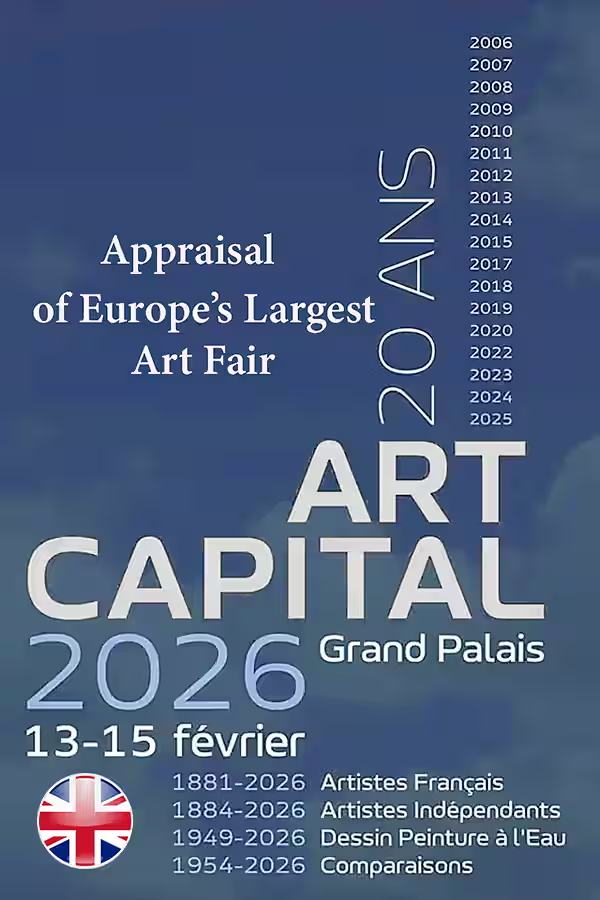
Location: Grand Palais, Paris - Event: Art Capital 2026
Preface: A Historic Gathering
Art Capital Paris 2026, Appraisal of Europe’s Largest Art Fair.
First, a reminder: Art Capital was created in 2006 from the desire of several « historic » salons of the Grand Palais and diverse artists to unite for a federating event.
Rooted in the tradition of artistic salons, it brings together four major societies to exhibit emerging and established artists from France and abroad:
Salon des Artistes Français (created in 1881)
Salon des Indépendants (created in 1884)
Salon Dessin Peinture à l’Eau (created in 1949)
Salon Comparaisons (created in 1954)
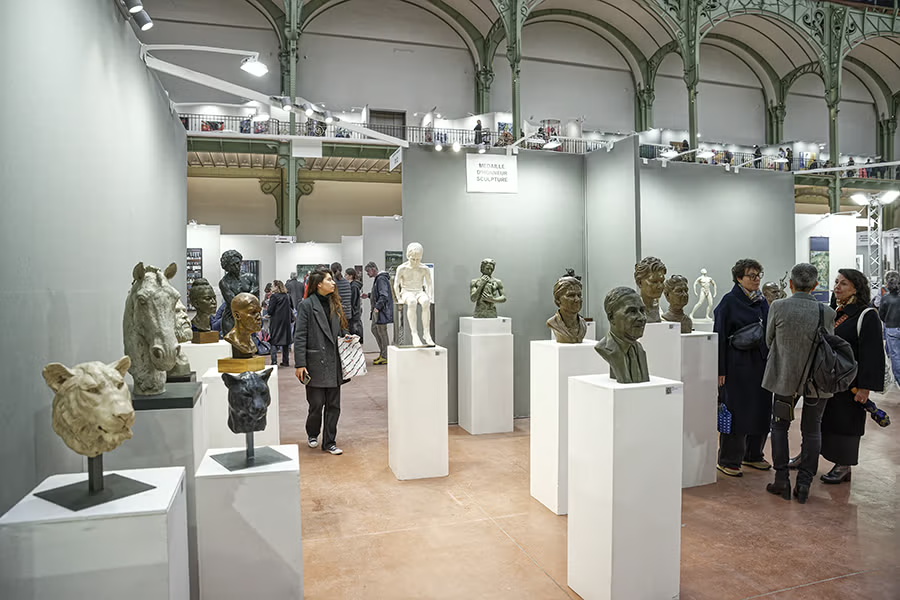
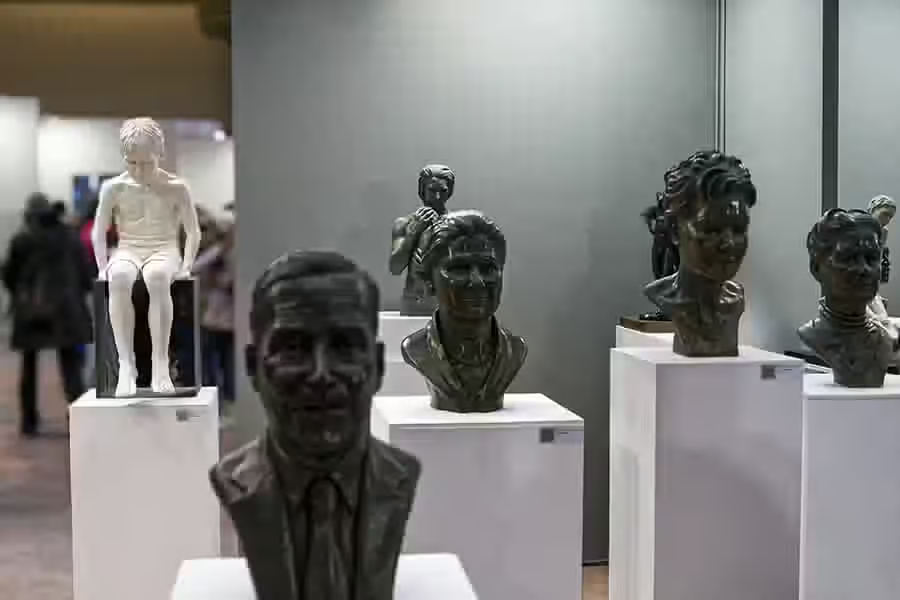
It is important to note that Art Capital is organized by non-profit associations, relying on subsidies from major actors like the Ministry of Culture. However, organizers have expressed concern over decreasing subsidies in recent years, while organizational costs continue to rise. For the 2026 edition, the event survived largely thanks to extensive volunteer work.
With over 50,000 visitors annually, the salon has established itself as a major scene in the art world, retaining its title as the largest gathering of artists in France (with more than 3,000 artists). Note that since its return to the Grand Palais, the event has been condensed to 4 days instead of 5, likely to manage costs and subsidy reductions.
For the 2026 vernissage alone, organizers announced over 14,000 visitors.
In addition to the four historic salons, Art Capital features a fifth space: IN SITU. This exhibition area is entirely dedicated to the universe of a single artist, allowing each creator to deploy their work freely, share their vision, and meet the public in a personal setting.
Walking Through the 2026 Salon
This year, I didn’t mix up the dates (unlike my mishap with Art Capital 2025!), so I attended the vernissage on February 12. You can’t be distracted every year!
However, photographing the works is not always easy due to the crowds, uncontrollable lighting conditions, and the sheer volume of pieces on display.
Choices must be made, and it’s never easy.
Since its creation, Art Capital has remained a place of exchange between artists and amateurs or collectors. It allows everyone to discover current artistic works and helps artists gain visibility. From discussions with several of them, it seems that participating in multiple salons is necessary to see real benefits (though there are always exceptions!). In fact, I crossed paths with many artists I had already met at previous sessions.
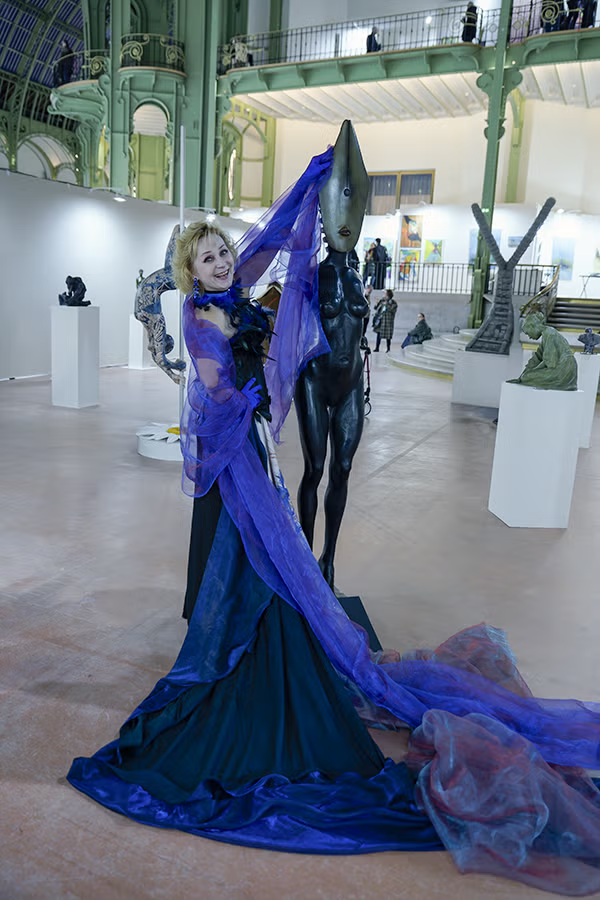
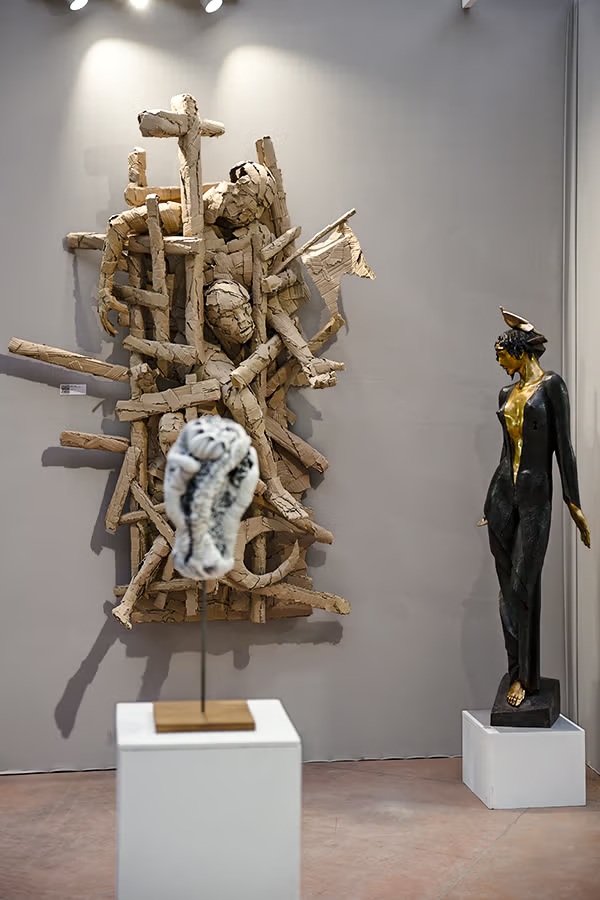
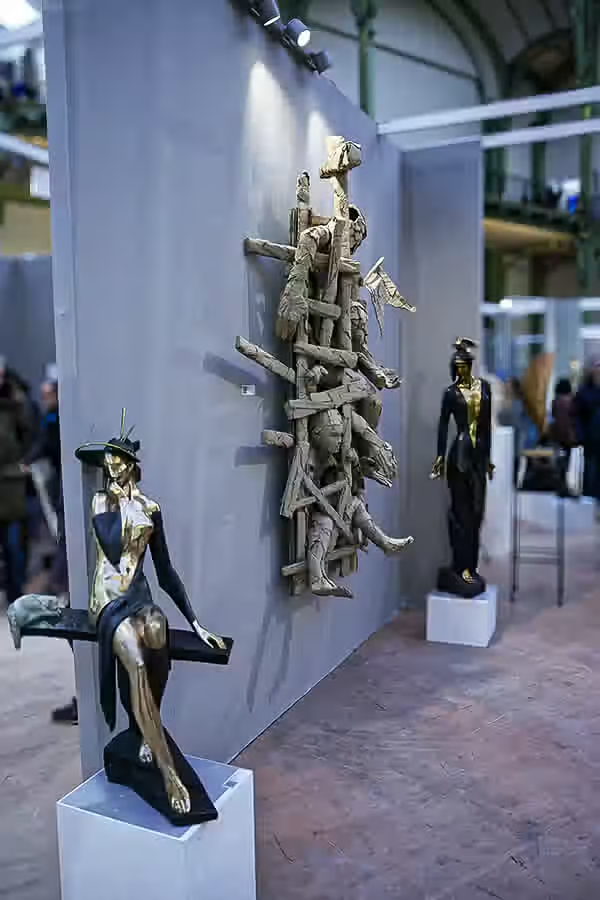
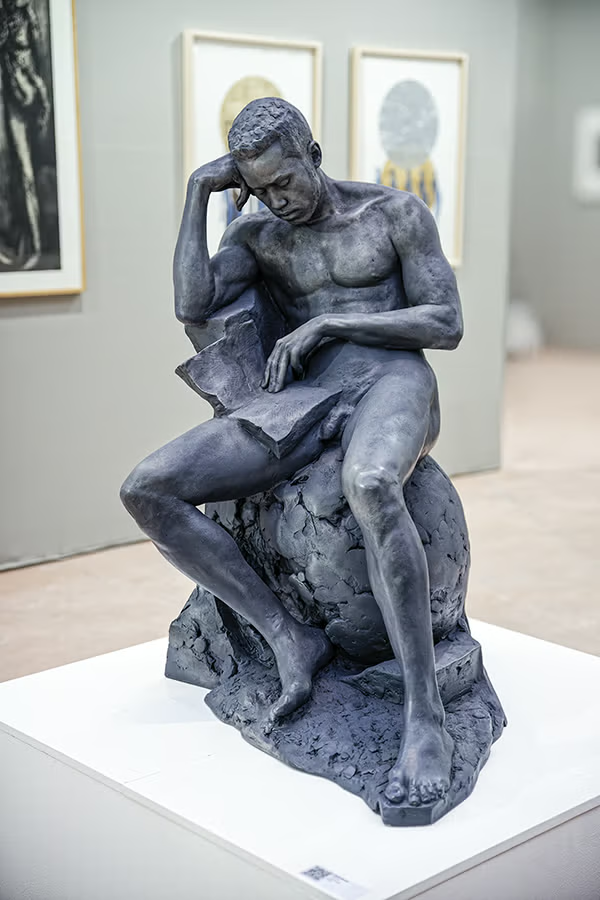
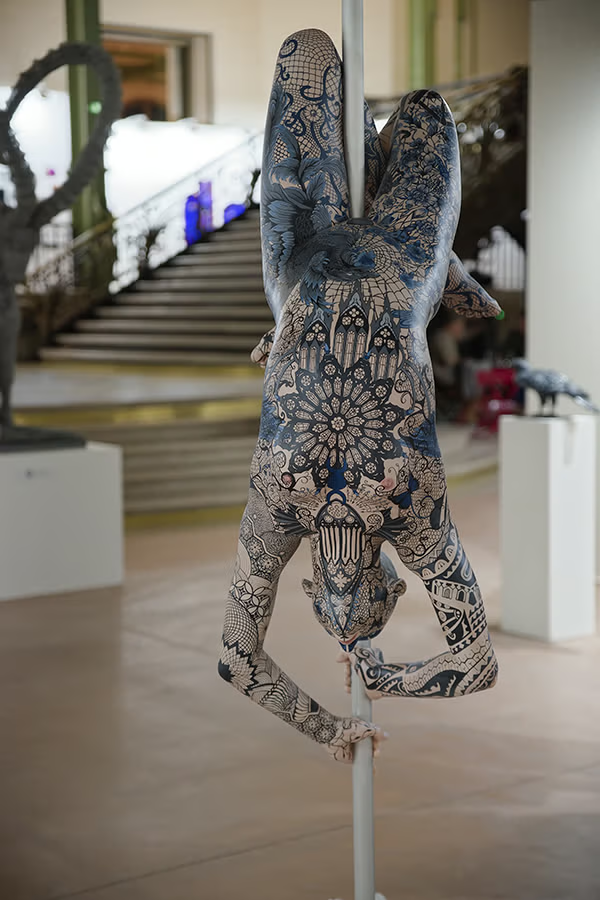
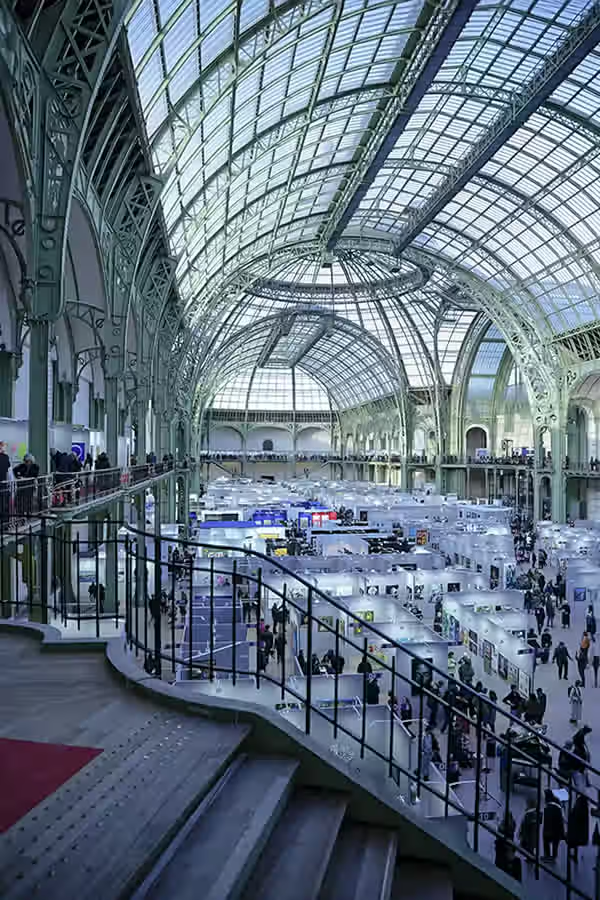
Three Artists to Watch in 2026
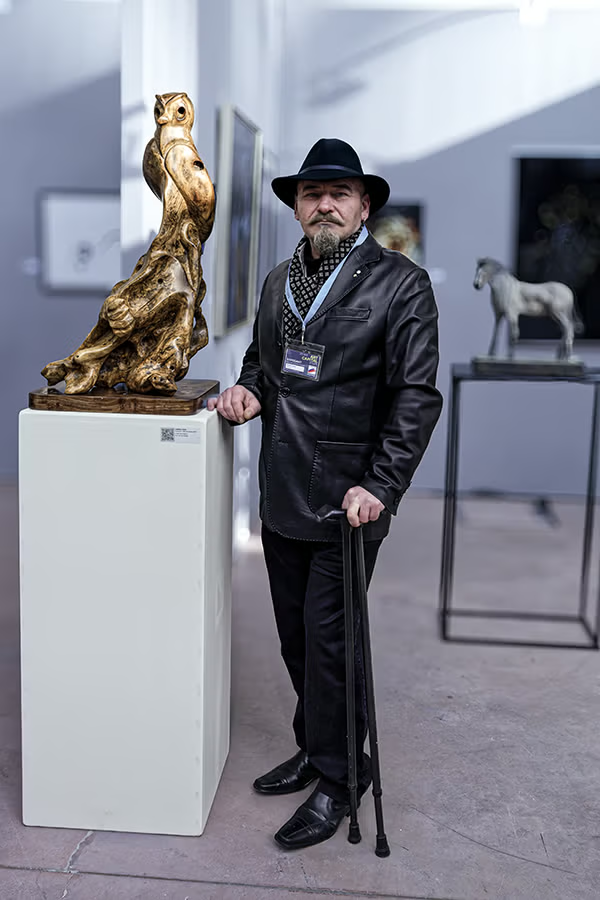
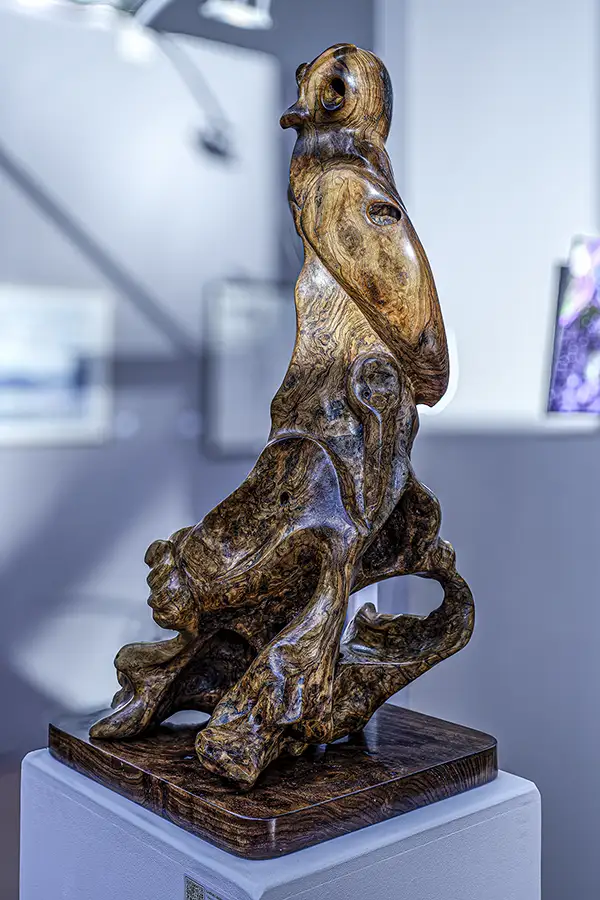
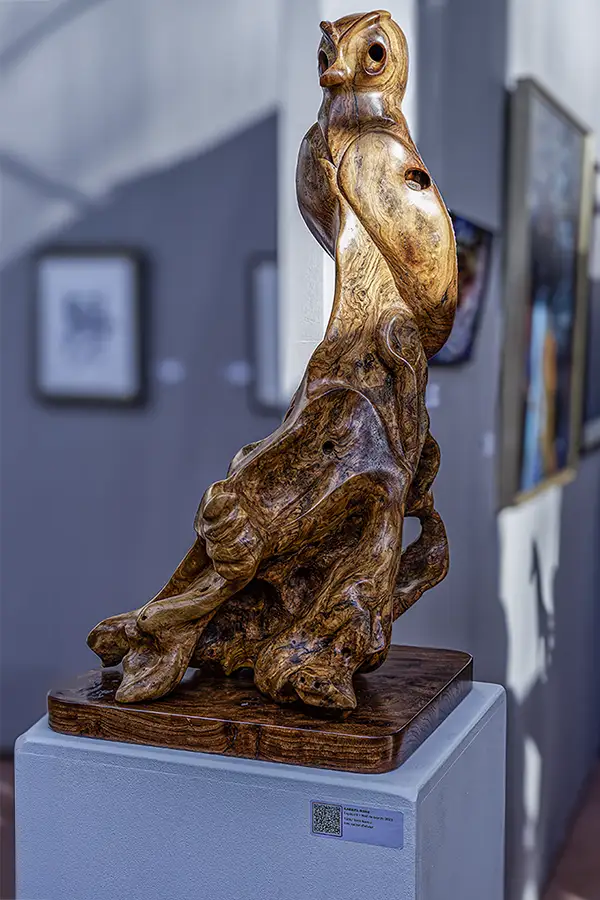
1. Gabriel Robu: Sculpting in 3D Wood
I had the opportunity to meet Gabriel Robu again, an internationally renowned sculptor whom I previously interviewed in his workshop/exhibition in Normandy in 2023, as well as at several Art Capital salons.
For 2026, he presented “Terra Nostra.” Crafted in olive wood his favorite material, this sculpture groups twenty-two creatures modeled in 3D, showcasing his remarkable expertise.
To fully appreciate the work, one must walk around it: with each pass, new and surprising perspectives emerge. It is not just a single sculpture, but multiple views that vary depending on the angle of observation.
My critique: I feel Art Capital could have positioned the sculpture better. It was impossible to walk all the way around it, preventing viewers from seeing the full 3D modeling of the sculpted creatures.
FB, & IG
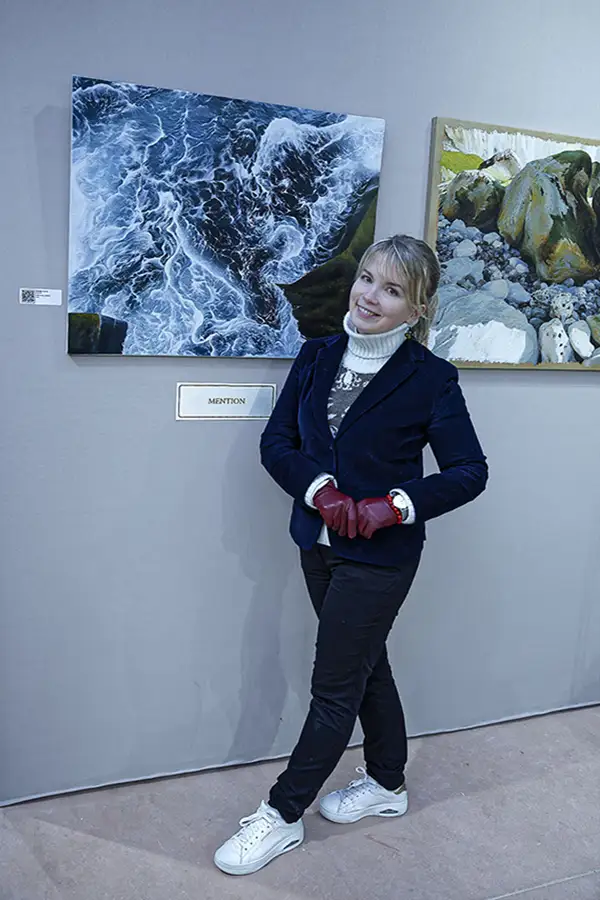
2. Hanna Meunier: The Chaos of Order
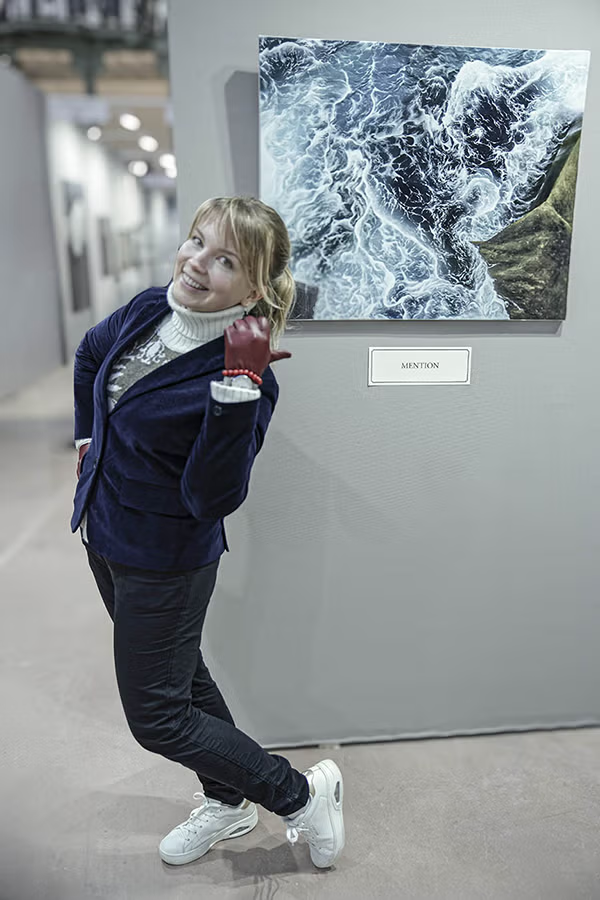
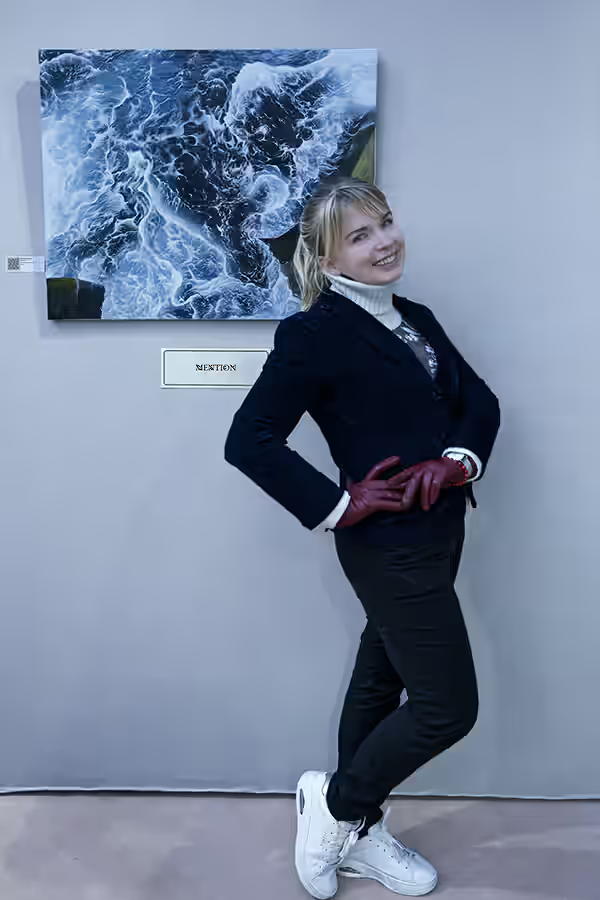
A bit further along, I stumbled upon a painting by Hanna Meunier, an artist I had been following for some time on the magazine’s social media.
It was a lovely encounter; this young artist is bubbling with energy and almost as talkative as I am (and for those who know me, that’s saying something but I own it!).
She explained the meaning behind her work:
« This canvas was part of my exhibition at the Carrousel du Louvre in October 2025. I was inspired by the strength and movement of water, which at first glance appears absolutely chaotic, but in reality, is perfectly ordered, guided by the structures surrounding it.
The force and rage of water hitting human-made structures is a call to combat and a reminder that action always wins over inactivity. »
This last sentence that she quotes corresponds well to a part of her own life journey, with a courageous fight won by Hanna thanks to the tenacity of her action…
But this is another touching story, which will undoubtedly be the subject of a future article, if Hanna still wishes.
I will include links to her social media so you can discover more of her work.
FB, IG & ArtMajeur
3. Lucile Callegari: Portraits of Melancholy
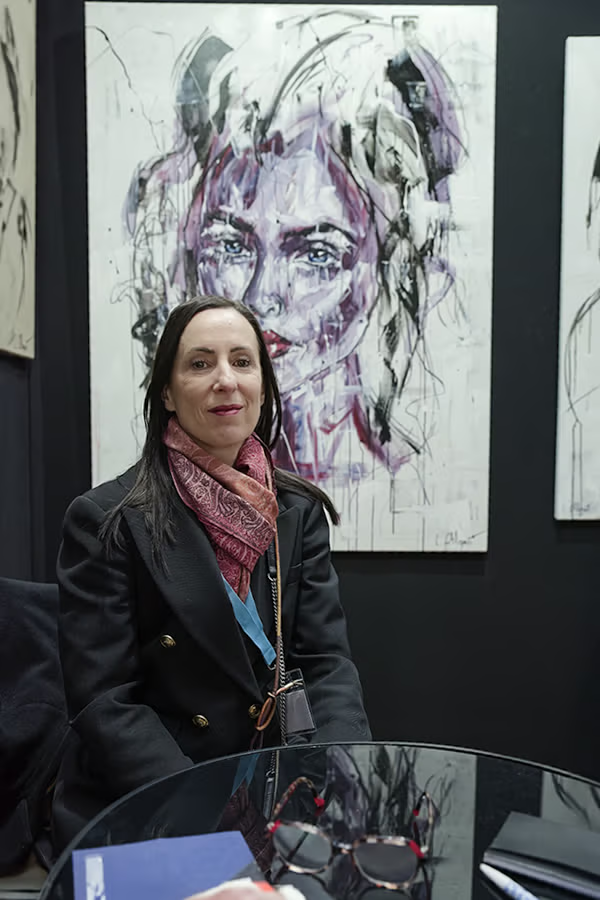
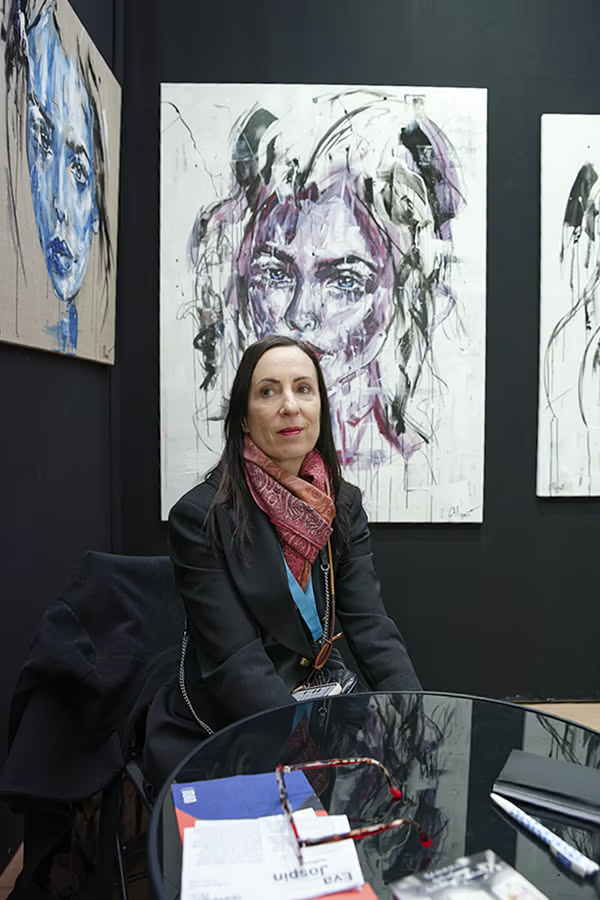
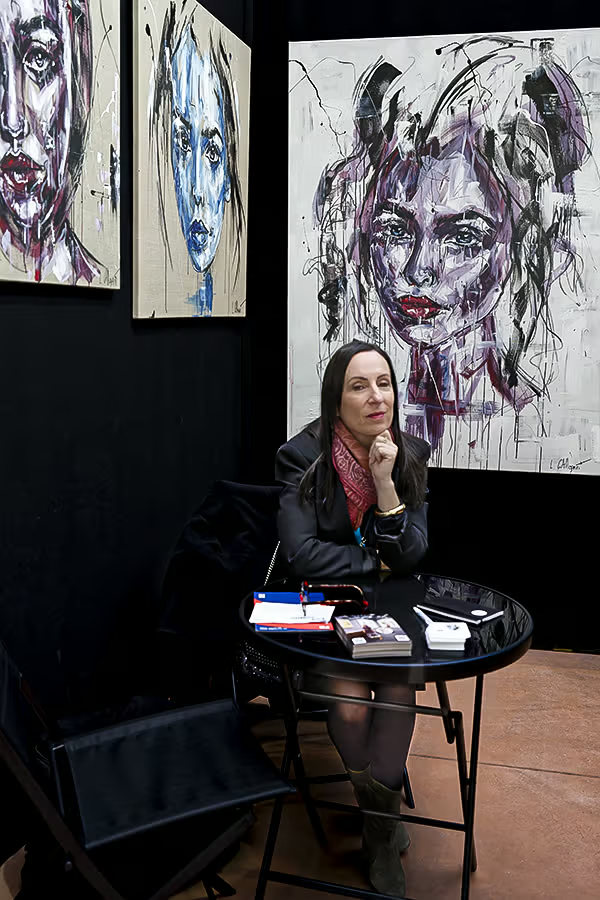
In the IN SITU section, I discovered Lucile Callegari, a French painter who lives and works between Paris and Bordeaux.
She shares:
« In 2010, an emotional shock pushed me toward painting, which became essential to my life. My motivation: to awaken memory, revive hope, and encourage personal development, for myself and others. I chose to devote myself exclusively to female portraits. »
I have crossed paths with her at several salons over the last 18 months and appreciate her approach. She treats female portraits with a unique vision. She is very sympathetic, though more reserved and less voluble than most of her peers.
If I were to compare Lucile to a writer, I would choose Baudelaire and his famous spleens from Les Fleurs du Mal. (Note: Baudelairean spleen refers to a deep melancholy born from the malaise of living. Although Baudelaire subtly associates it not with a true desire to die, but rather with a rage to live.)
Disclaimer: This is purely a personal opinion and may not reflect her true personality. I don’t know her well enough; it is simply an impression or interpretation.
Regardless, I adore her portrait work, which radiates mystery and melancholy. Her autodidactic approach is rapid and energetic, executed in a single burst. The women she paints reflect her intimate identity… or perhaps old wounds from which she frees herself through creation?
I strongly invite you to discover her universe and works at future exhibitions or galleries.
FB, IG & Site Web
My Verdict: Three Hearts for Art Capital 2026
After these pleasant encounters, I continued my wanderings over the four days, without a predefined itinerary, letting chance guide me to other beautiful surprises among the countless works presented by the 3,000+ artists. This diversity demonstrates the vitality of art in its various expressions, both nationally and internationally.
It is impossible to cite all the talented painters and sculptors I was lucky enough to meet. To discover them all, you’ll need to pick up the salon catalog.
Trends 2026: The Victory of Consensus?
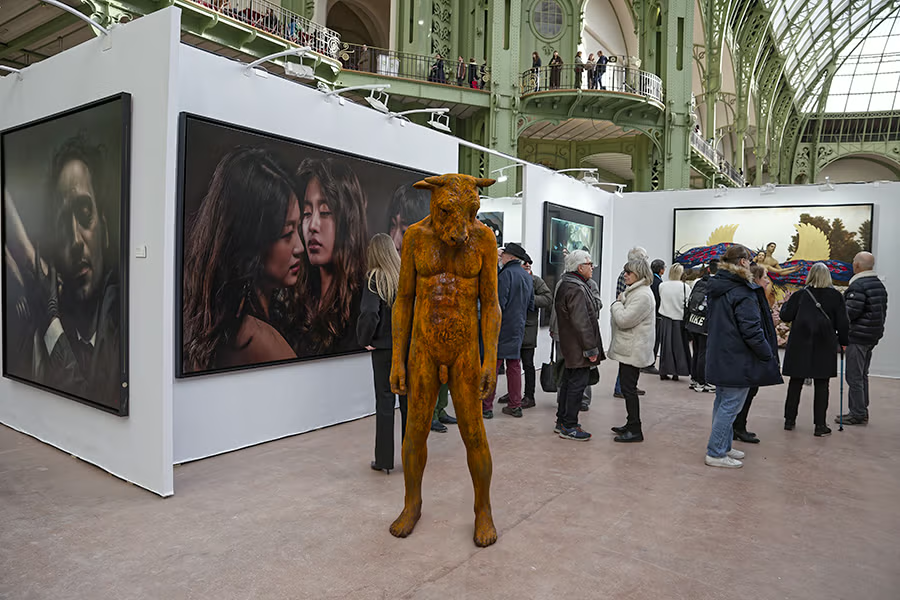
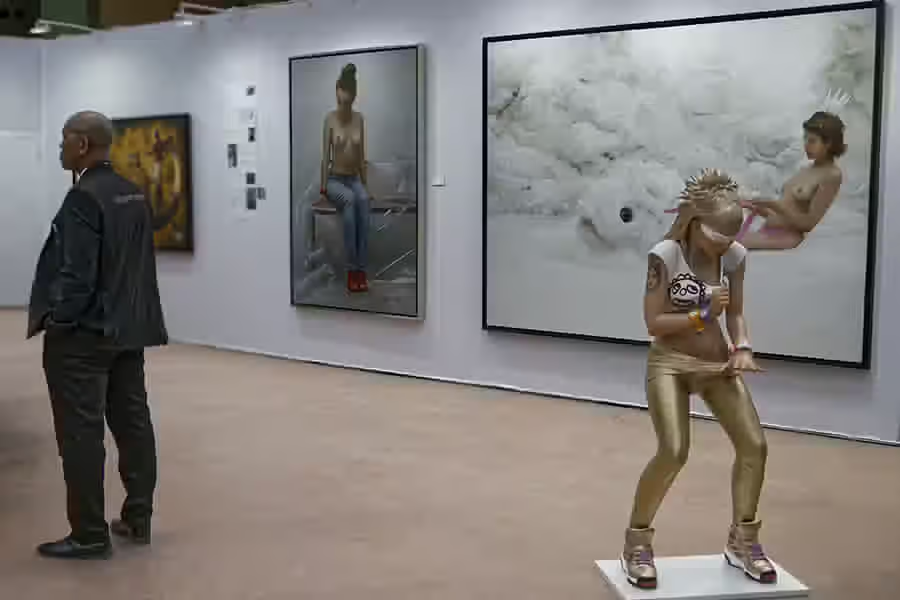
Walking between the stands, one is struck by how figurative art asserts itself prominently, often extended by dreamlike or fantastic elements.
While the last century saw the collapse of almost all constraints, some artists continue to explore paths that were once off the beaten track.
But a new aesthetic seems to be emerging: one imbued with more softness, linked to figuration, yet turned toward a creative universe. Notably, animal painting has become increasingly represented in recent years, appearing in photography, digital arts, and beautifully crafted animal sculptures.
Abstract expressionists are not left behind, continuing their research into combinations of colors and forms, sometimes uncertain, allowing each spectator to let their imagination work.
Perhaps this reflects the search for a new type of aesthetic sentiment, specific to our era.
However, walking through the stands at Art Capital 2026 (and other major salons), I sensed an underlying theme: the victory of consensus?
« Augmented » figuration, omnipresent animal themes, technical virtuosity… all contribute to producing works that are immediately readable, easier to exhibit, and easier to share.
A Critical Reflection
While the 20th century methodically deconstructed frameworks, liberated forms, and shifted the boundaries of art, a significant part of contemporary creation today seems to operate a movement of retreat. Under the guise of softness, narration, and accessibility, a consensual, sometimes
smoothed-out aesthetic is taking shape, where conceptual risk-taking gives way to calibrated visual efficiency.
This shift is also observed in photography, digital arts, and sculpture, where formal excellence seems to increasingly prevail over experimentation or confrontation.
The work seduces, but questions less. It captures the gaze, without always moving it.
Abstraction, although still present, appears relegated to a form of quiet resistance. Abstract expressionists pursue their chromatic and formal research, but in a global environment where audacity, radicality, and discomfort seem less valued than immediate seduction and public adherence.
Through this edition, Art Capital reveals an artistic landscape traversed by a fundamental tension: that of a contemporary art seeking recognition and visibility, but at the risk of a weakening of critical depth. A more accessible creation, certainly, but one that raises the frontal question of real renewal, transgression, and the capacity of art to still disturb, displace, and interrogate our times.
Are risk, dissonance, and radicality—the historical engines of artistic renewal—being relegated to the background?
This is, of course, just an interrogation, but it could be the subject of a future article after a more detailed observation of the directions of different currents
in the 21st century.
Conclusion
Art Capital 2026 remains the largest exhibition salon in Europe. In the magnificent setting of the Grand Palais, it offers these 3,000 artists the opportunity to gain visibility and notoriety, both nationally and internationally. And once again, the 2026 season was sumptuous.
For me, it is an indefinable pleasure to wander for four days amidst all these works and artists, who kindly take a few moments to explain the emotions they try to transcribe through their exposed work.
Art Capital Paris 2026, Appraisal of Europe’s Largest Art Fair.
Reviewed by Dominique Henry, for Infos Spectacles & Loisirs
Other articles to discover
The Art Capital Fair: Official Website
FAQ: Visiting Art Capital Paris
1. What is Art Capital?
Art Capital is a major annual art event in Paris, held at the Grand Palais. It groups four historic art societies (Artistes Français, Indépendants, Dessin Peinture à l’Eau, and Comparaisons) into one massive exhibition, featuring over 3,000 artists from around the world.
2. When and where does it take place?
The event typically takes place in February at the Grand Palais in Paris. For 2026, it ran for 4 days, starting with the vernissage on February 12. Check the official website for exact dates for future editions.
3. Is it free to enter?
Entry policies can vary. Often, the vernissage or certain days may require a ticket, while other times might be free or offer reduced rates. It is best to check the official Art Capital website for current ticketing information before your visit.
4. Can I buy art directly from the artists?
Yes! One of the main goals of Art Capital is to connect artists directly with collectors and art lovers. Many works are for sale, and you can discuss prices and details directly with the artists or their representatives on site.
5. Is it worth visiting if I’m not an art expert?
Absolutely. With over 3,000 artists, the diversity is staggering. Whether you like classical figurative painting, modern abstraction, sculpture, or digital art, you will find something that speaks to you. It’s a great place to discover new talents and enjoy the vibrant atmosphere of the Grand Palais.
6. How do I get to the Grand Palais?
Metro: Lines 1, 7, or 13 to Champs-Élysées – Clemenceau.
RER: RER C to Invalides (short walk).
Bus: Lines 28, 42, 72, 73, 83, 93.